Easy EVCP finance arrangements
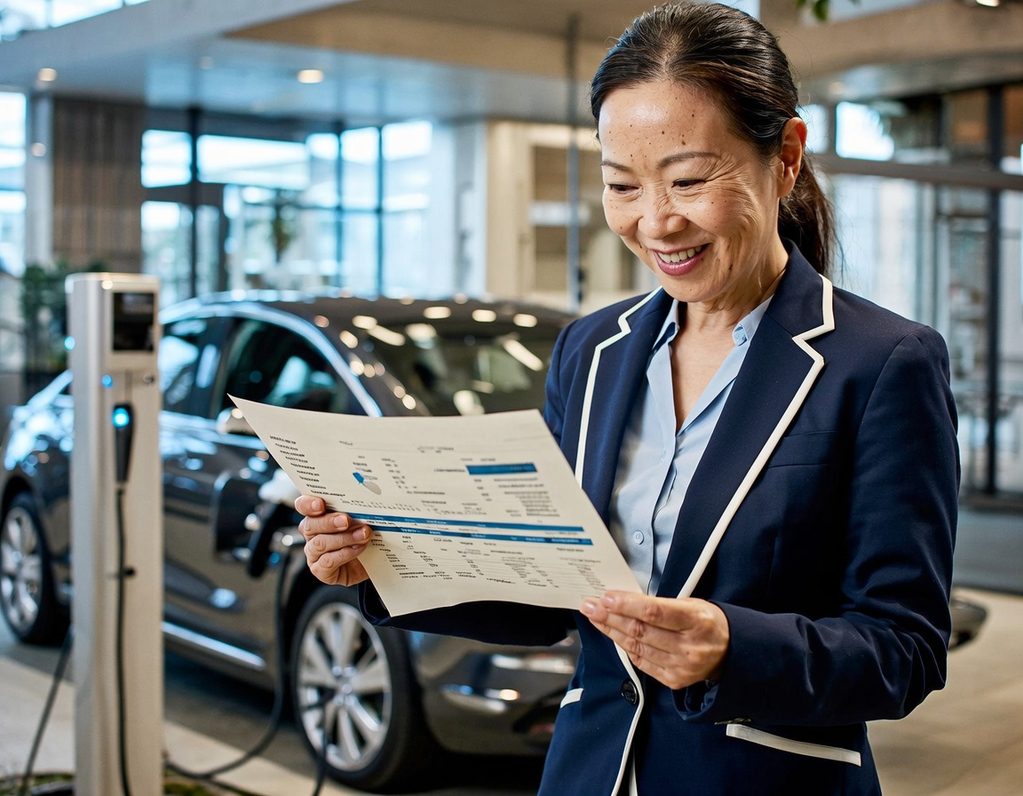
36 or 60 month finance arrangements fully covering installation and parts.
Once you are happy with the proposal, there is an initial finance arrangement fee (usually well under £500+VAT). At the termination of the lease, purchase the equipment for a peppercorn fee!
The monthly repayments for businesses become an allowable business expense (rather than potentially a capital investment), thus saving on corporation tax.
Easily become a public CPO
(Charge Point Operator)
A Charge Point Operator (CPO) service can be provided on a pay-as-you-go basis and includes:
- Payment handling
- Driver support
- Charger Monitoring
- Tariff Management
- Reporting
- Ongoing operational support.
This gives you a simple way to offer public EV charging without having to manage the operational side yourself.
Software for easy management
Non-public chargers still need control and visibility.
Fleet and Workplace software fully deployed on your behalf, for a small monthly fee.
- Driver access and user permissions
- Staff/Visitor/Private groups
- Usage & energy reports
- Cost allocation & reimbursement
- Charger Monitoring
- Operation visibility
- Future option to add public charging
Take the headache out of accounting for the charger usage.
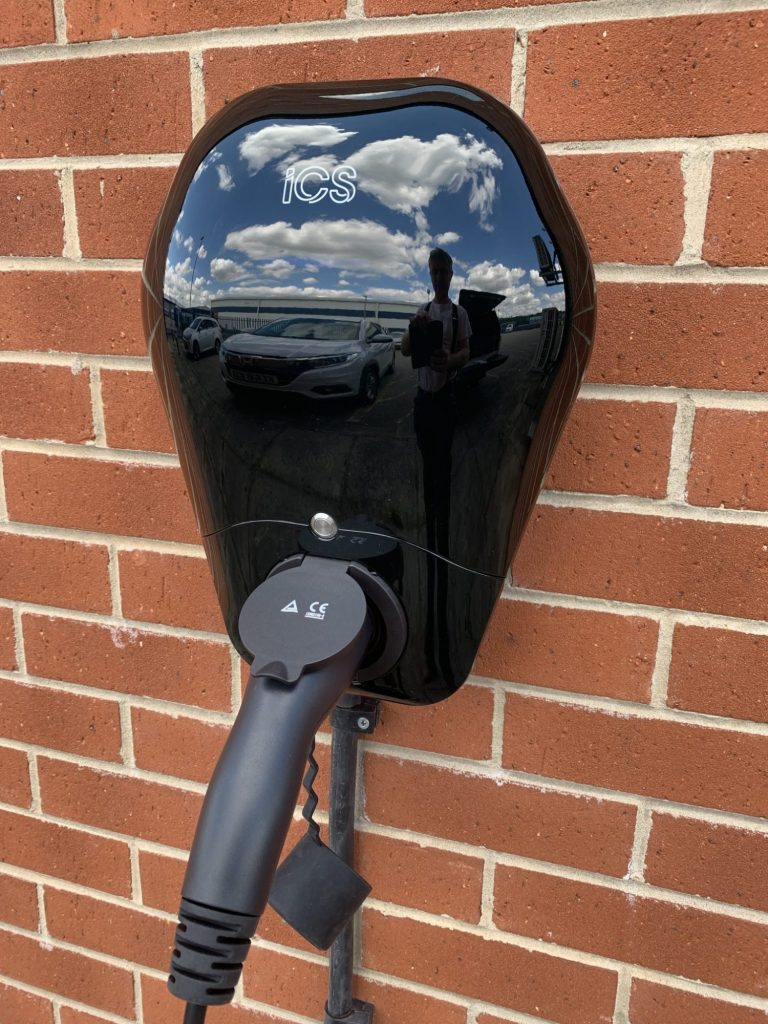
How can I get the fastest possible charger on my house installed safely, and to the latest standards?
Professional EV Chargers
installation service
We work to the latest applicable standards. This means the installation is much safer. Currently these are the Electrical Regulations (BS7671) and the IET Code of practice for EV Charging.
If you want to check how much your installer really knows, ask him about the two safety issues below, which will indicate if he's been properly trained and truly understands the regulations.
For 2 or more sockets, we can offer FINANCE options, along with a fully managed service backed by the manufacturers.
You can also let someone else take all the hassle of being a CPO (Charge Point Operator) while you just benefit, and attract more people to your location.
EV Charger speed
Maximum charging speed
The number one issue I get regularly asked, is:
Why can we not have a faster charger on our house?
The answer is not as simple as you might think.
But my supply says 100 Amps!
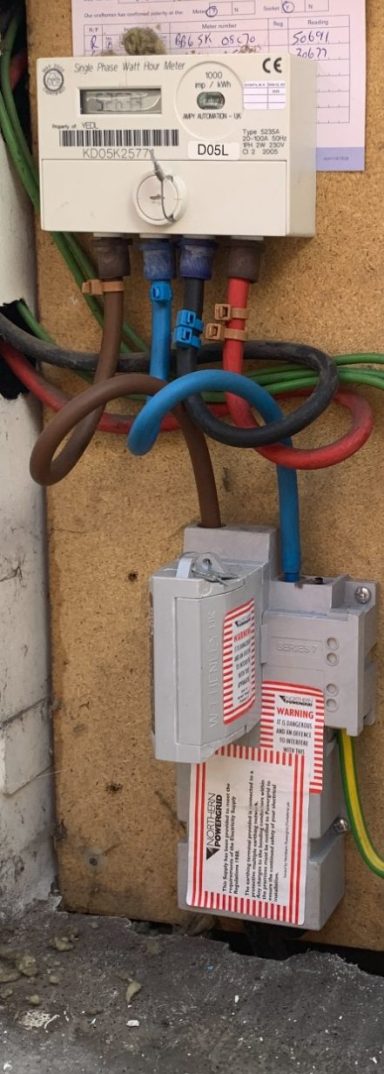
The main fuse (or main "service fuse" or "Cutout") in the meter cupboard, says 100 Amps on it. So I can take 100 Amps? NO!
Firstly, the rating displayed is for the mechanical part as a maximum, it does not refer to the fitted fuse inside.
Size of main fuse
Most new houses are fitted with a 100 Amp cut-out to BS1361 but the fuse inside is almost always 80 Amps. (Older supplies are usually 60 Amps, and I have seen 40 and 25 Amps.)
The electricity meter may not be capable of 100 Amps and may catch fire if overloaded.
You are not allowed to change this fuse because the DNO (Distribution network operator) such as Northern Powergrid, have decided what the cable to your house and the cable in the street is capable of carrying.
But my fuse is 80 Amps!
These cutouts were designed for a PEAK of 100 Amps and NOT a continuous supply.
Now with EV chargers and heatpumps being installed, it has been clarified that the standard 100 Amp cutout cannot supply more than 60 Amps for longer than a few minutes without overheating. Obviously this is dangerous.
We are simply not allowed to take more than 60 Amps from one of these supplies without special permission and arragnement with the DNO.
There are other solutions, so please contact us.
Professional electricians versus DIY installation.
EV Charger safety - Earthing and bonding.
A large lump of metal (your nice new EV car) connected to your house electrical system sounds safe if it's "earthed". In some ways that's true.
Unfortunately it's not that simple. Basically, the "earth" for your house electrical supply was never designed to be touched outdoors by people holding on to large earthed metal objects whilst in the rain and stood on the actual earth.
Earth cables in the street are actually the same wire as the the neutral wire. They sometimes break. This means that the "earth" in your house actually becomes a high voltage for a few hours. You are completely safe inside your house so long as your bonding is good.
However, in this situation, If you were to touch any electrical earths (such as your car being charged) while you are stood on the real outdoor earth, you could be killed. Literally. And the number of people hurt annually in the UK by these "open-PEN faults" as they are called, is on the increase.
If you use a trained qualified electrician who really understands all this, and knows how to mitigate this, you will be very, very safe. Ask him about this "simultaneous contact" issue.